For many reasons, people are drawn to the mysticism embodied by horses—an animal that also exudes an elegant nature. These large mammals have not only accompanied people through battle, hunting trips, travel and competitive races, among other activities, but they’ve served as soulful companions as well. It’s all too obvious that artists throughout centuries, would also be compelled to depict “the horse” in all their brilliant glory.
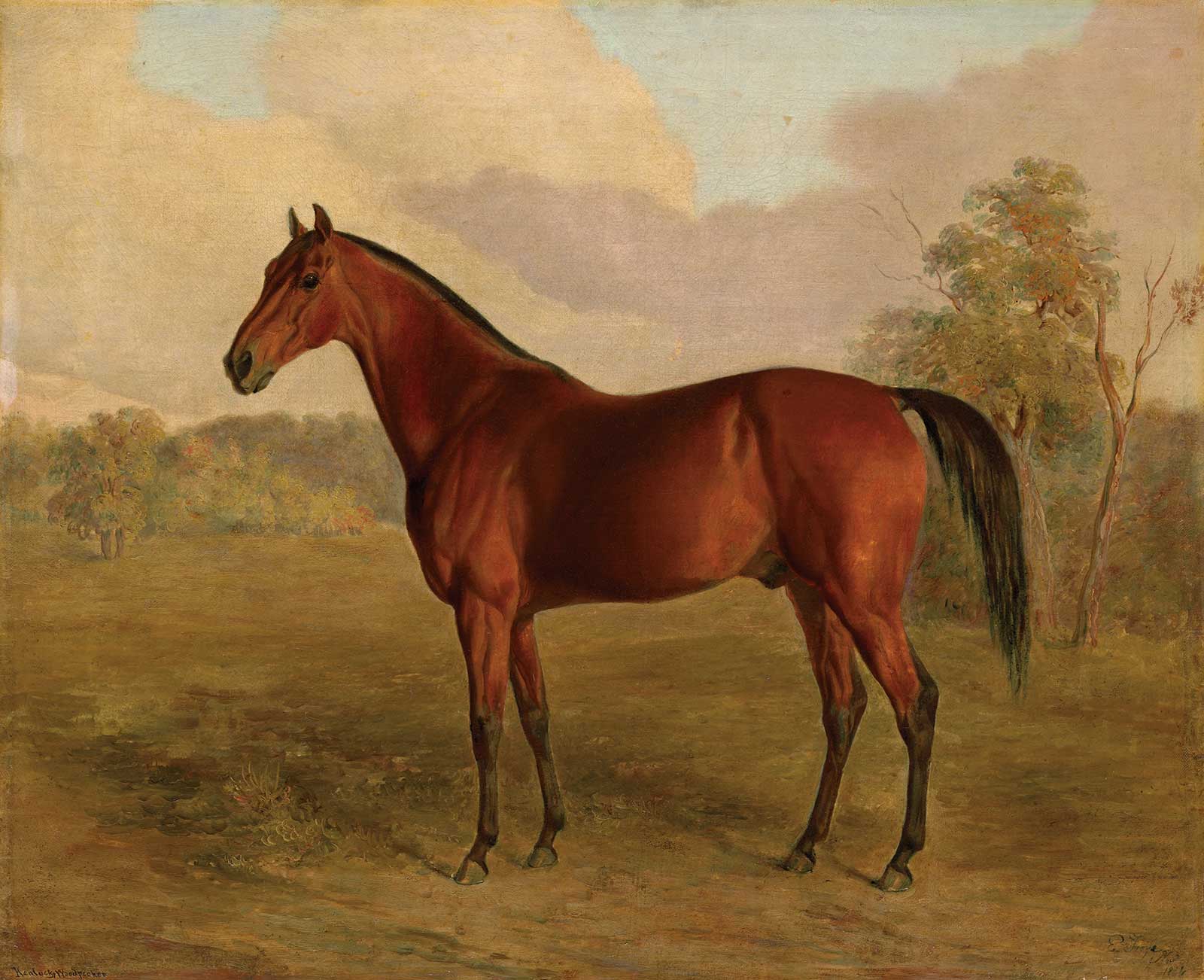 The Clark, Kentucky Woodpecker, 1834, oil on canvas. Clark Art Institute, 1955.878., by Edward Troye (1808-1874).
For example, artist Edward Troye (1808-1874), was renowned for depicting thoroughbreds, creating a template for future artists and paving the way for the sporting genre. “Following his marriage to Miss Cornelia Ann Van de Graaff in 1839, Troye settled in her home state of Kentucky,” note representatives at the Harness Racing Museum & Hall of Fame. “Flourishing amidst the state’s rich horse-breeding culture, Troye devoted a majority of his time to horse portraiture. Painting in the pre-photography era, [the artist] provided the trotting and thoroughbred communities with expertly crafted portraits. Without them the world might not have had a visual record of trotting horses that include Abdallah, Belmont, Dexter, Dictator and Mambrino Pilot, and thoroughbreds Lexington, Glencoe and American Eclipse. Troye is believed to have painted more than 350 horses, mainly racehorses from across the Southern states, during his career.”
In his painting Kentucky Woodpecker, 1834, found in the collection of the Sterling and Francine Clark Art Institute, we see a gorgeous example of Troye’s skill at play. The accuracy and detail found in the horse’s profile, set against a background of foliage and sky, is truly a sight to behold.
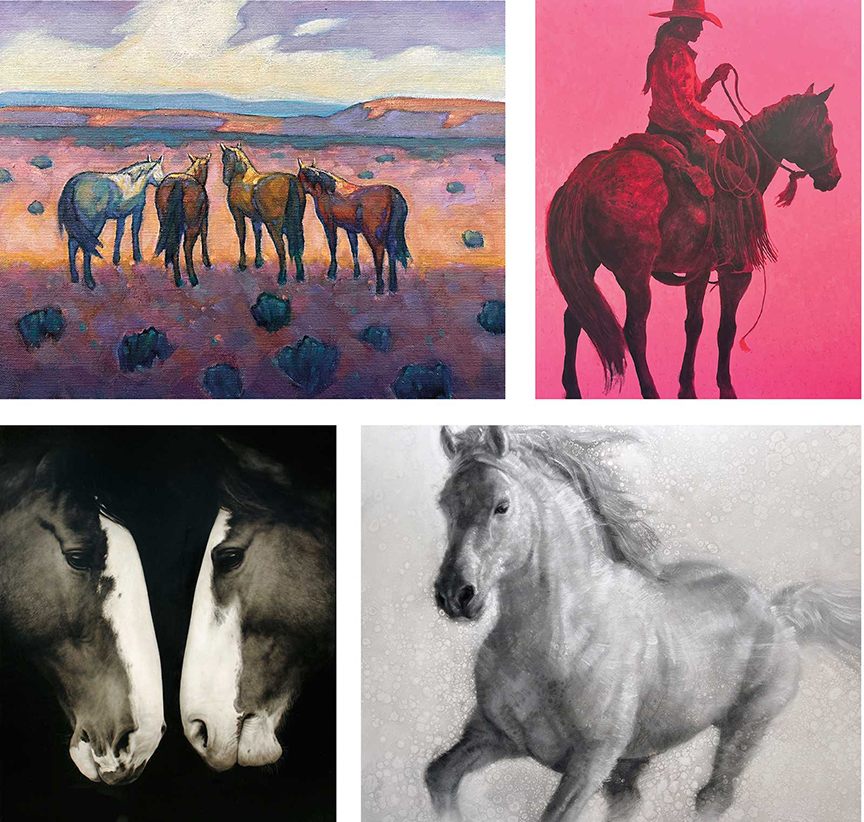
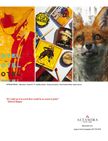
Top: Medicine Man Gallery, Turned Out, oil, 11 x 14", by Howard Post. Altamira Fine Art, Persephone, mixed media on canvas, 72 x 60", by Duke Beardsley. Bottom: Altamira Fine Art, A Love Story, oil on canvas, 72 x 60", by Kenneth Peloke. Altamira Fine Art, Galloping Mist, oil on canvas, 48 x 60", by David Frederick Riley.
In more contemporary works, such as Turned Out by Howard Post, we see less focus on accuracy in the animal but a colorful example of horses among a sweeping Western landscape. Part of the show Paintbrush Cowboys at Medicine Man Gallery this past January, the pieces show the animal as the cowboy’s companion on the range or as passive subjects in pens.
While Post is now retired from rodeo riding and says, “I don’t have horses anymore and I quit competing a couple years ago…But I still admire horses and paint them frequently.” The artist is also known for depicting his horse subjects in high, angled perspectives—scenes that involve horses in their pens, for example, creating a unique feel and design.
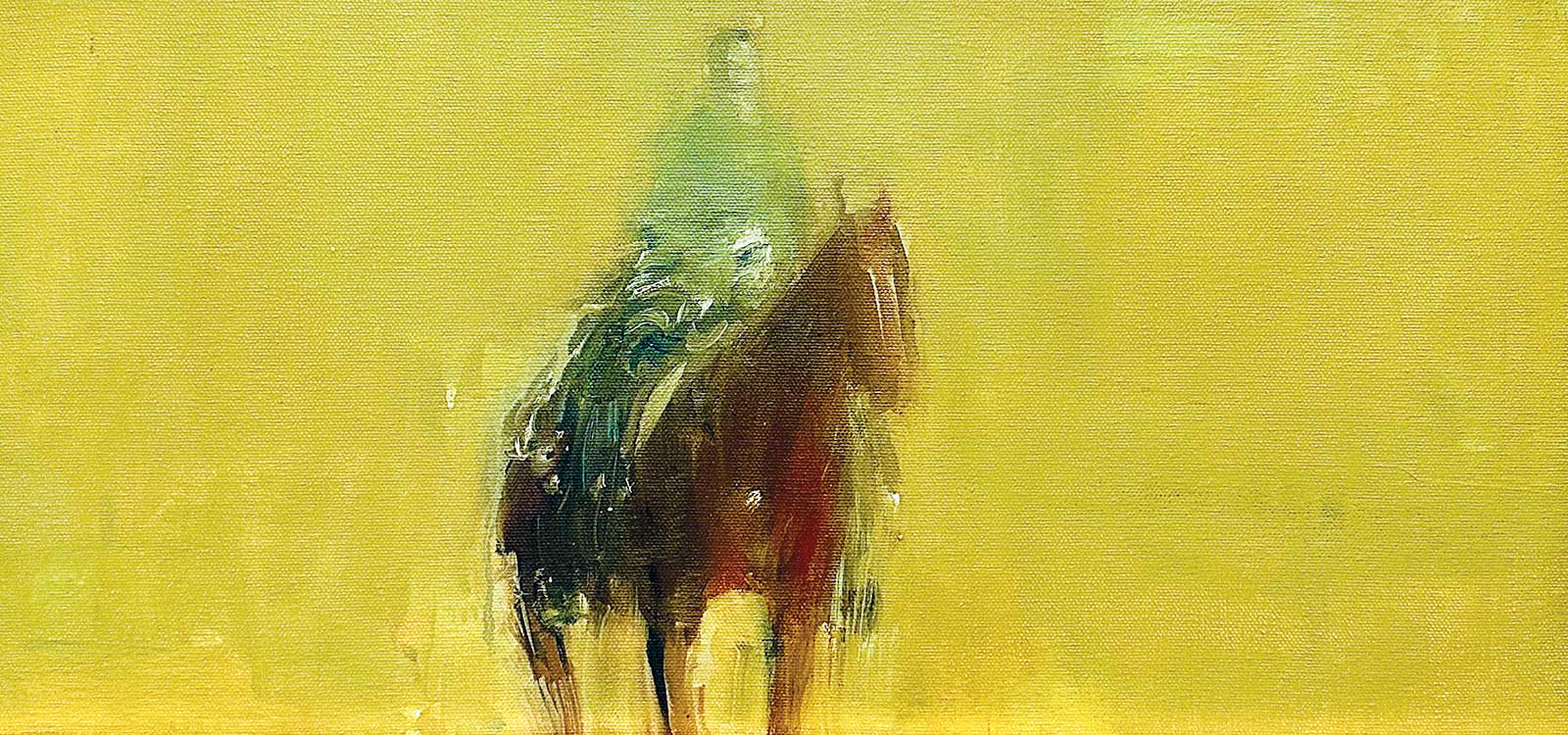
Deborah R. Hill, Horse and Rider, oil, 12 x 24"
Whether a horse artwork—painting or sculpture—is depicted in high realism or through abstracted elements, it remains clear that there’s “something” about the animal that touches the human soul. It may be ineffable and elusive, but the connection is there, so much so that artists far and wide dedicate their entire careers trying to communicate the many sentiments surrounding our relationship with “the horse.”
Continue reading the remainder of this section dedicated to the art of the horse for more insights from artists and galleries.
Altamira Fine Art specializes in the exhibition and sale of Western Contemporary artwork, offering an active exhibition schedule year-round between two gallery locations in Jackson, Wyoming, and Scottsdale, Arizona. “While horse art is prevalent in both the Scottsdale and Jackson Hole markets, it’s a subject that truly transcends regionality,” says the gallery. “The spirit, power and freedom of the horse has widespread appeal, and the variety of styles with which our artists portray the subject are vast. From a Pop Art sensibility to monochromatic realism, the beauty of the horse prevails.”
Altamira represents horse imagery like Persephone by Duke Beardsley; A love Story by Kenneth Peloke; and Galloping Mistby David Frederick Riley.
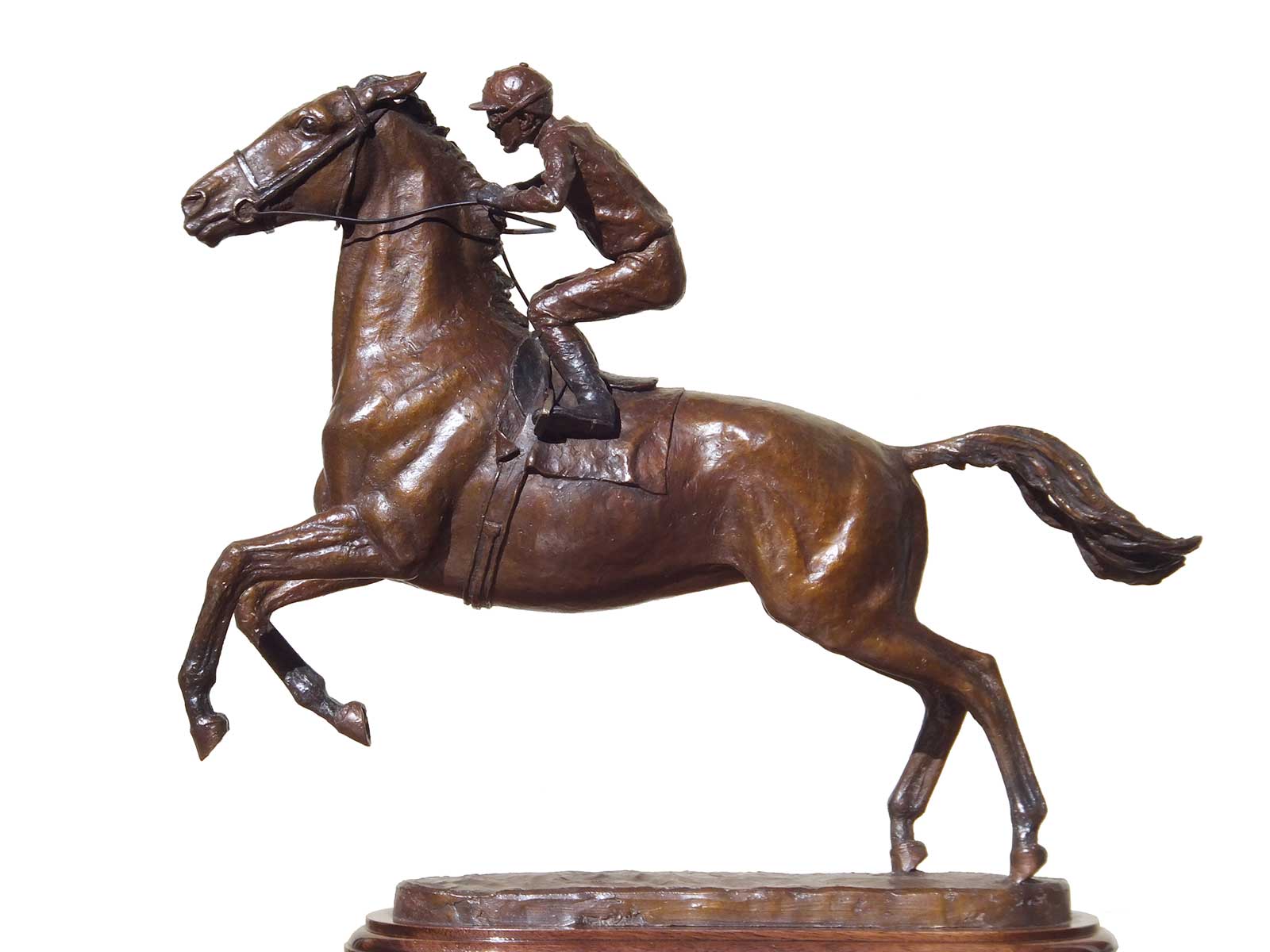
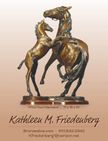
Kathleen Friedenberg, Flying Start, bronze, 14½ x 12 x 4"
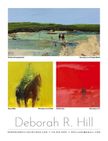
Artist Deborah R. Hill finds inspiration in the depth of color and form in the natural world—rural vistas, shorelines, beach and marsh, while also painting still life in the studio. “I’m a professional artist with a passion for painting and depicting my surroundings in an abstract-realism style, finding familiarity, but giving the viewer a new representation of a scene,” says Hill. “In many of my landscape paintings there is a horse present, and very often I choose to depict the horse in a vibrant palette full of action as in First Horse. Other times, in a more realistic palette as in The Parade.”
Hill utilizes the horse in many of her paintings as an homage. “The horse has provided us with the first means of mobility and has benefited mankind for centuries,” she adds. “I am a big supporter of The Wild Refuge located in Colorado. The 30,000-acre refuge provides a protected home for the wild mustang horses in the U.S. I believe it is important to celebrate the horse but also protect them the best we can, and be a voice to the voiceless.”
Find more of Hill’s work at Spa Fine Art, Saratoga Springs, New York; Five 3 Gallery, Laguna California; and The Comma Fine Art, Orchard Park, New York.
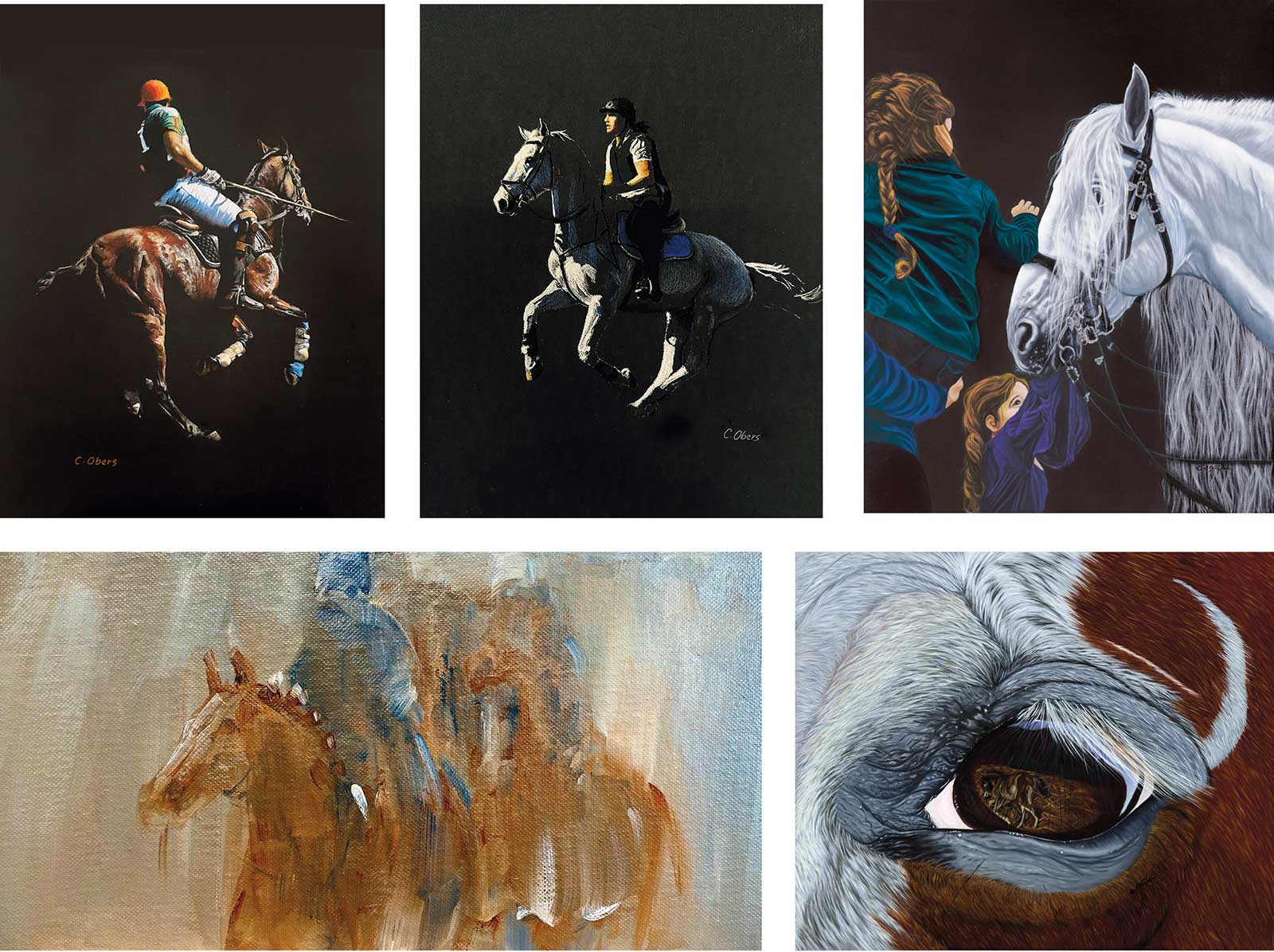
Top: Christine Obers, Covering #4, pastel, 16 x 12". Christine Obers, Three, Two, One Jump! (Counting the Strides to the Jump), pastel, 12 x 9". Lana Tyler, If Wishes Were Horses, oil on linen, 20 x 16" Bottom: Deborah R. Hill, The Parade, oil, 6 x 13". Lana Tyler, In a Mare’s Eye, oil on canvas, 20 x 24"
Sculpture artist, Kathleen Friedenberg, grew up in England, and has always been fond of all animals, especially horses. “I’ve sculpted over 20 different species, including people,” says the artist. “As a former veterinarian and medical illustrator, I’m particularly concerned about correct anatomy, and body language in relation to the specific situation. Above all, my sculpture must have life! If it isn’t alive, I’ve failed.”
When it comes to collecting art of the horse, Friedenberg says, “The crucial concern when buying artwork is that one feels a connection with the piece, that one must enjoy living with it.”
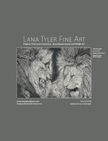
Lana Tyler tries to capture a moment of emotion, action or a unique perspective in her work. “The girls reaching out to pet the horse in If Wishes Were Horses reminded me of how I was at that age whenever I was around a horse,” she says. “I wanted to capture that feeling of awe and love. By keeping the faces of the girls’ obscure, I wanted others to be able to see themselves in them. In a Mare’s Eye came from the perspective of what a mare might see when looking at her foal, reflected in her eye. My models were two half-sisters that I had bred.” In other works, Tyler captured the power, beauty and drama of the horse.
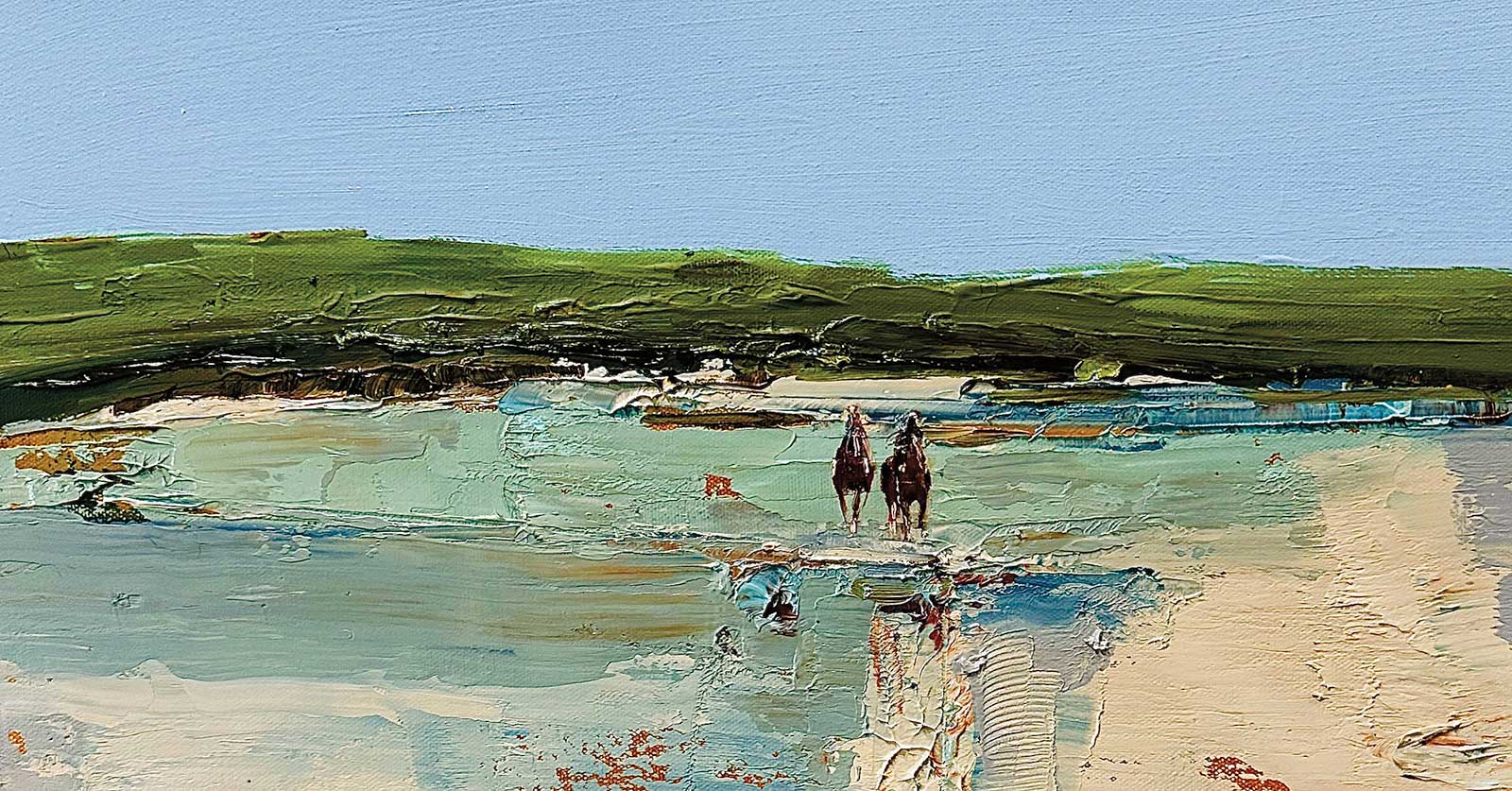
Deborah R. Hill, The Horse in the Landscape, oil, 10 x 20"
To those who wish to collect equine art, Tyler recommends buying pieces that speak to you and touch you emotionally rather than following fads. Tyler is currently available for commissions.
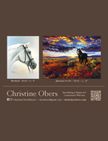
“Horses fascinate me,” says Christine Obers. “Powerful as they are, they can be very shy and timid. Gaining their trust requires communicating in a way the horse understands. The horse will set aside its natural fear and sense of survival to place its complete trust in a person. Over the years, I’ve created numerous portrait commissions of special horses, capturing their unique personality. I still enjoy portrait commissions but I’m also exploring art that speaks to the unique bond that people have with their horses—especially in equine sports. This synergy between human and animal is beautiful. The horse becomes an extension of our own body. For decades I rode and showed my horses in sports such as cross-country, show jumping and dressage. It’s this feeling of unity and shared energy that I want to express in my work. By distilling everything down to the essential elements, the artwork has a sense of electricity, power and movement.”
Featured Artists & Galleries
Altamira Fine Art
7038 E. Main Street, Scottsdale, AZ 85251, (480) 949-1256
172 Center Street, Jackson, WY 83001, (307) 739-4700
www.altamiraart.com
Christine Obers
Mariposa, CA, (209) 878-7109
www.christineobers.com
Deborah R Hill
dhillart@gmail.com
www.deborahrhillpaintings.com
Instagram: deborahhillpaintings
Howard Post
www.howardpostfineart.com
Kathleen M. Friedenberg
(610) 642-2942
www.bronzealive.com
Lana Tyler
Greeley, Colorado
lanatylerfineart@hotmail.com
www.lanatylerfineart.com
Medicine Man Gallery
6872 E. Sunrise Drive, #130
Tucson, AZ 85750
(520) 722-7798
www.medicinemangallery.com
Clark Art Museum
225 South Street, Williamstown, MA 01267
(413) 458-2303
www.clarkart.edu
Powered by Froala Editor